Threema and IBM Research: Collaboration for a Quantum-Secure Future
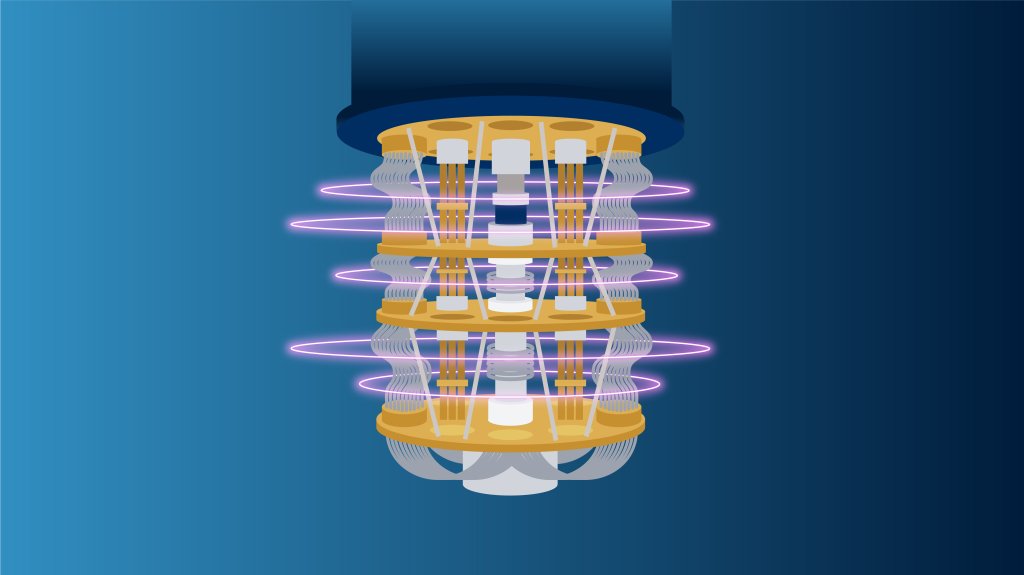
We are joining forces with IBM’s renowned research division to implement post-quantum cryptography in Threema. This collaboration will further strengthen Threema’s exceptional security standards, ensuring that our communication solutions are prepared for future threat scenarios.
Quantum Computers and Classical Encryption
Unlike conventional computers, which use bits that can be in one of two states (0 or 1), quantum computers use so-called “qubits,” which can assume multiple states simultaneously due to quantum mechanical effects such as superposition and entanglement. This enables certain calculations to be performed much more efficiently than with conventional computers.
Classic cryptographic methods, such as RSA, rely on the fact that certain mathematical operations – in particular the factorization of large numbers – are extremely difficult to solve. If this changes with the advent of powerful quantum computers, these methods could become vulnerable.
Current quantum computers have only a few hundred unstable qubits with high error rates. However, in order to solve cryptographically relevant tasks, a quantum computer would need to work with much more reliable and stable qubits.
Building such a computer poses significant technological challenges, and experts believe it will take several more years to achieve this.
Collaboration with IBM Research
To prepare for the risk posed by future quantum computers, we will gradually equip Threema with new encryption methods that are not based on efficiently computable mathematical operations.
We are taking this important step, which consolidates and further expands Threema’s exceptionally high security standard, together with proven pioneers in the field of post-quantum cryptography: IBM Research.
IBM’s research department is one of the largest and most important of its kind. It has produced several Nobel Prize and Turing Award winners and has been a driving force in developing key technologies for decades.
IBM Research drives innovation in various ways, particularly in quantum computing. For instance, in 2019, the research department introduced the first commercially available circuit-based quantum computer, the IBM Q System One. Additionally, the cryptographers we collaborate with have contributed significantly to two of the three NIST post-quantum cryptography standards.
With this collaboration, we are laying the foundation for quantum-secure communication while reinforcing Threema’s core values: uncompromising security and cutting-edge technology.
We look forward to a successful and interesting collaboration.







