Get the Message? Of Ghosting, Dry Texting, and Left on Read
Have you ever heard someone say they were “ghosted” and had no idea what it means? Or are you unsure what “dry texting” and being “left on read” is? In this blog post, we explain some common Internet slang terms and concepts relating to instant messaging.
Dry Texting
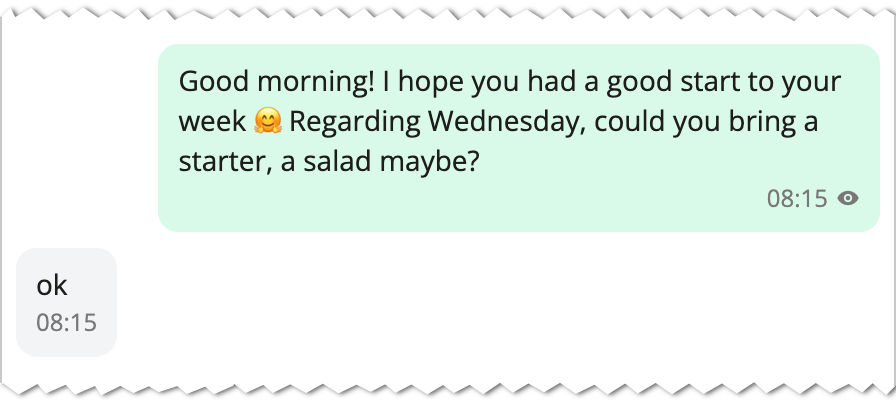
“Dry texting” refers to giving very brief, emotionally flat replies in a chat. Instead of engaging with the message or asking follow-up questions, the person only sends short replies like “ok,” “yeah,” “haha,” or the thumbs-up emoji. This can quickly make the conversation feel one-sided and give the impression that the other person isn’t interested in chatting. However, that’s not necessarily the case; sometimes they just don’t have much time.
|
Left on Read
If you don’t even get an “ok” or a thumbs-up emoji in response, and the conversation suddenly stops, that’s a case of being “left on read.” Many messaging apps show when a message has been opened; in Threema, for example, an eye icon appears (unless, of course, the recipient has disabled read receipts for privacy reasons).
If the chat partner reads your message but doesn’t reply, you have been “left on read.” There can be various reasons for this: perhaps the person doesn’t have time to reply right away, or maybe they simply forgot about the message – but sometimes it can also signal the end of the conversation, for example due to a lack of interest in the topic.
Emoji reactions are an elegant way to conclude a conversation and signal that the last message has been acknowledged without leaving the chat partner “on read.”
Double Texting
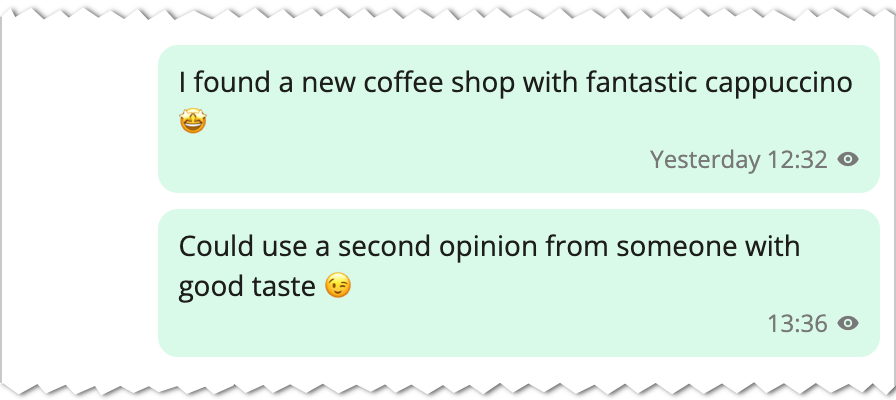
If you’ve been “left on read” and send another message to resume the conversation or bring up a new topic, you’re “double texting,” i.e., sending multiple messages in a row before the other person has responded to the first one.
|
Ghosting
If, even after sending several messages, there’s no response for an extended period of time, this is referred to as “ghosting.” In this situation, one person abruptly cuts off contact without any explanation. They simply stop replying, even though the conversation had been going normally just moments before. To the one being ghosted, it feels as though their chat partner has vanished.
Example: Alice and Bob have been messaging each other regularly for a few days, and then suddenly Alice stops responding, even though the messages were delivered or even read. Bob has therefore been “ghosted.”
Fan Service
This term refers to content or actions specifically designed to delight fans of movies, TV shows, or video games. Content creators include special scenes, references, or small details for loyal fans to recognize and appreciate.
More broadly, fan service can also appear in online communities or chats, for example, when a company responds to the community’s wishes or plays along with running gags. This often takes the form of a so-called “Easter egg.“
Examples: A TV series brings back a character from earlier seasons because fans really liked them, or a company hides a clue in a blog post that only attentive readers will discover.
IC
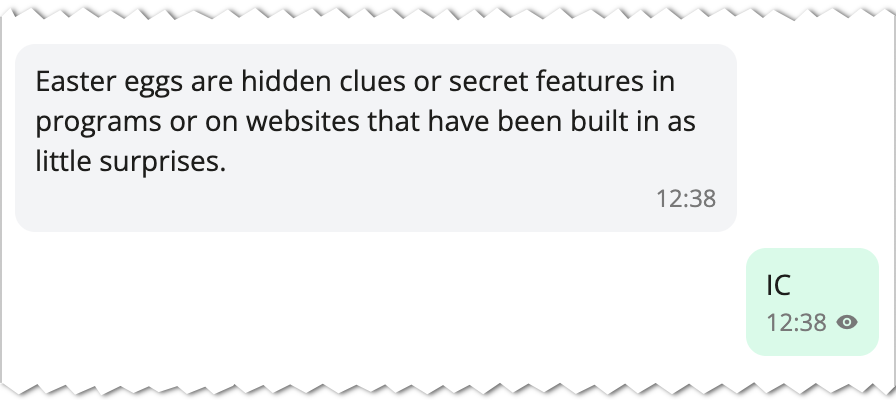
“IC” is short for “I see.” In chats, it is used to show that you understand what the other person is saying or that you’ve taken note of the information. It doesn’t express strong emotion and is therefore quite neutral. Depending on the context, it can simply mean “okay, understood,” but it can also signal that the conversation is coming to an end if there’s nothing more to add.
|







