Zero Trust: Rethinking Security in a Connected World
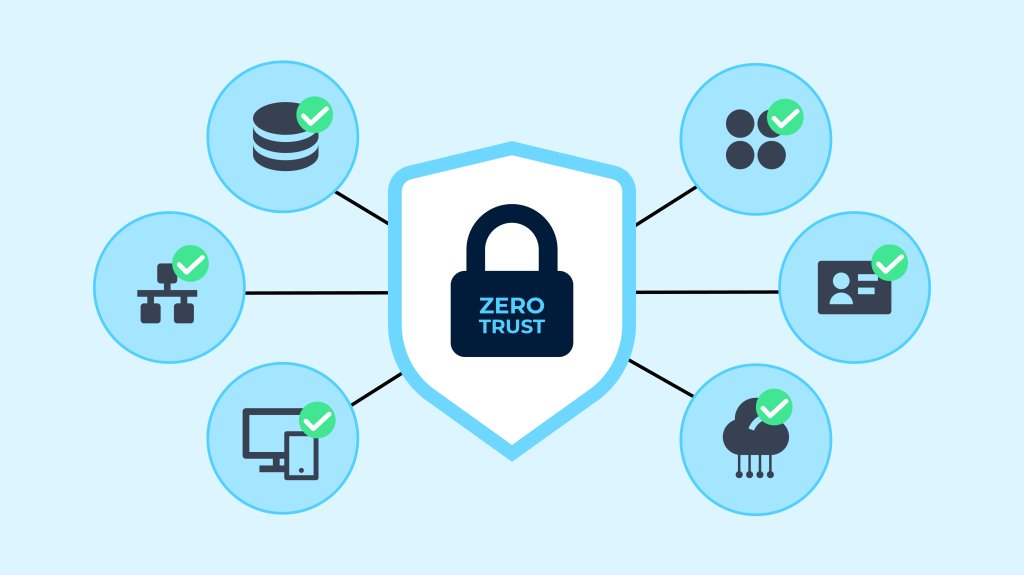
Today’s digital environments are more connected and distributed than ever. Traditional security models built around a trusted network perimeter are no longer sufficient. As cloud services, remote work, and mobile devices blur the boundaries of corporate networks, a new guiding principle has emerged: Zero Trust.
Zero Trust is a cybersecurity strategy based on a simple idea: never trust, always verify. Instead of assuming that users or devices within the network are secure, Zero Trust continuously authenticates and authorizes every request, regardless of whether it comes from a laptop on the corporate network, a phone on public Wi-Fi, or a virtual machine in the cloud. Identity, device health, location, and context all play a role in granting access. Every connection is treated as potentially hostile until proven otherwise.
Three principles lie at the core of the Zero Trust strategy:
Continuous authentication: authentication is strengthened with multi-factor methods, adaptive risk assessments, and continuous device health checks
Least privilege: privileges are limited to exactly what a person or service needs to perform their duties
Assume breach: the architecture assumes that a breach will eventually occur, so it is designed to contain any intrusion and prevent lateral movement across the network
Why Zero Trust Matters Today
Credential-based attacks are still the leading cause of data loss. Phishing emails and reused passwords provide adversaries with an entryway, but Zero Trust mitigates the damage by requiring additional proof of identity and device integrity before granting access. This continuous verification renders stolen passwords far less useful.
Remote and hybrid workforces dissolve the traditional network edge, so treating every connection as “outside” forces the same rigorous scrutiny regardless of location. In cloud-native environments, identity-driven policies replace brittle IP-based firewalls, allowing precise control over which services users can access. Even trusted insiders are limited by least-privilege settings, which reduces the impact of accidental or malicious misuse.
Lastly, many regulatory frameworks (e.g., the EU’s GDPR and the US HIPAA) now demand demonstrable controls over access and protection. Zero Trust provides a clear, auditable path to compliance, thereby reinforcing customer confidence.
Zero Trust and Secure Messaging
Since messaging tools are a major attack vector, choosing a secure solution built with Zero Trust–friendly features reduces systemic risk.
Both Threema Work and Threema OnPrem support features that are in line with the Zero Trust security model:
End-to-end encryption and zero-knowledge architecture: All communication is consistently end-to-end encrypted (including profile pictures and status messages), and the messages are deleted from the servers upon delivery. This aligns with the Zero Trust notion that no part of the system can be assumed safe; each interaction must be protected.
Metadata restraint: With Threema, only the absolutely necessary data is processed and stored. Limiting data at rest reduces the attack surface and the risk if any component is compromised.
Strong access controls: Threema Work offers a central user management and integration with central directory services (e.g., Entra ID), as well as the option to set device usage policies.
Option for full data sovereignty: Threema OnPrem can be installed on your company’s own infrastructure. This enhances trust boundaries and aligns with the Zero Trust idea of isolating resources and controlling access explicitly.
Implementing a business messenger that supports the idea of Zero Trust can help companies to establish or strengthen a Zero Trust posture: while identity, device, and monitoring controls protect the company’s network and data, a secure messaging app like Threema Work ensures that all corporate communication remains secure. Together, they establish a security foundation that can withstand the ever-changing digital landscape.







