Security Doesn’t Equal Privacy
When it comes to data protection on the Internet, security and privacy are often mentioned in the same breath. However, the two terms are not synonymous. We explain the differences.
At the beginning of 2026, ownership of Threema is transferred from Afinum Management GmbH to Comitis Capital GmbH. The German investment firm, which focuses on companies with a strong sense of purpose and a dedication to sustainability, will support Threema in further strengthening its position in the field of security and data protection.
For Threema users, nothing will change. Our mission, the company strategy, and the management team remain the same.
When it comes to data protection on the Internet, security and privacy are often mentioned in the same breath. However, the two terms are not synonymous. We explain the differences.
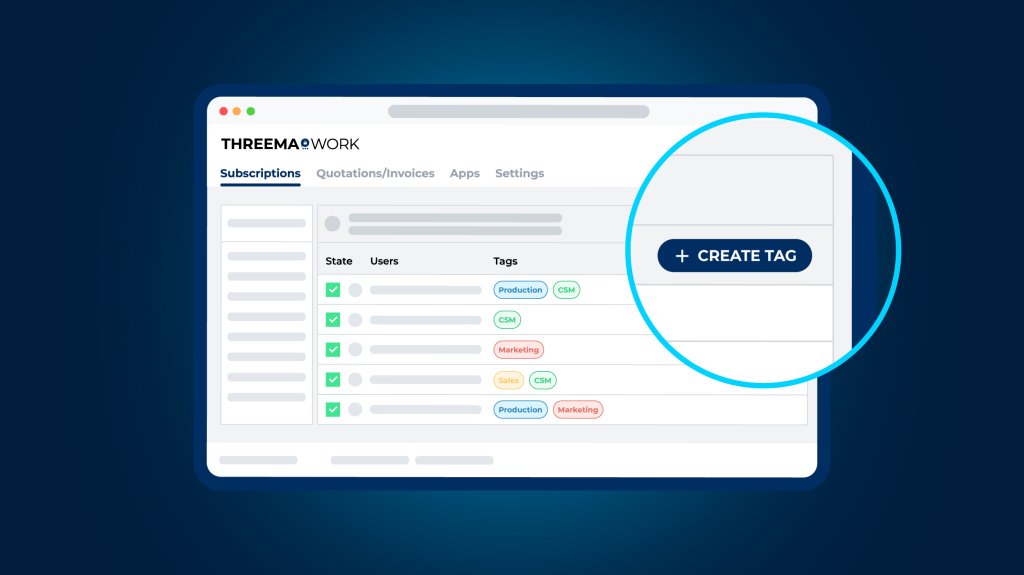
Threema Work is not only a messaging app for businesses, it is also a practical tool for making information quickly and easily accessible. With the help of bots, it’s possible to set up interactive systems that automatically provide users with answers to frequently asked questions.
Demand for secure corporate communication is increasing across Europe – not least because EU regulations such as NIS2 and DORA mandate secure communication channels. Consequently, more and more companies in French-speaking regions are choosing Threema Work. To simplify user administration, the management cockpit of Threema Work, Threema Broadcast, and Threema OnPrem is now also available in French, in addition to German, English, and Spanish.
In medical facilities, the requirements for data protection and security in digital communication are particularly high. To enable healthcare professionals to easily and confidentially exchange information, Threema has partnered with HIN to provide the framework for their messenger service, HIN Talk.
This week, various media outlets reported that WhatsApp exposed user data on a massive scale. Some called it the “largest data leak in history,” others said the situation to be worse than one might think at first. We somewhat disagree. A brief assessment.
In response to increasing surveillance on the Internet and the weakening of our privacy that goes along with it, the “digital integrity” movement is forming resistance. In Switzerland, two cantons have already voted decisively to establish a fundamental right to “digital integrity” in their state constitutions. At the end of the month, the canton of Zurich will also vote on this issue.
Does this statement make your hair stand on end? Unfortunately, the “nothing to hide” argument has persisted for far too long and often prevents any constructive discussion about privacy protection on the Internet. It’s high time to debunk it.
Do you think instant messaging is the same as any other form of written communication? Think again. Over time, various unwritten rules have emerged that need to be observed if you want to get your chat message across correctly. We have compiled a few of these rules of etiquette in this (not-quite-serious) blog post.
Have you ever heard the phrase “I have nothing to hide”? It’s often used by people who advocate government surveillance as a means of combating crime. According to this logic, however, anyone who is not a criminal has nothing to hide and therefore does not need an encrypted communication channel. This assumption is not only wrong, but also quite dangerous.